

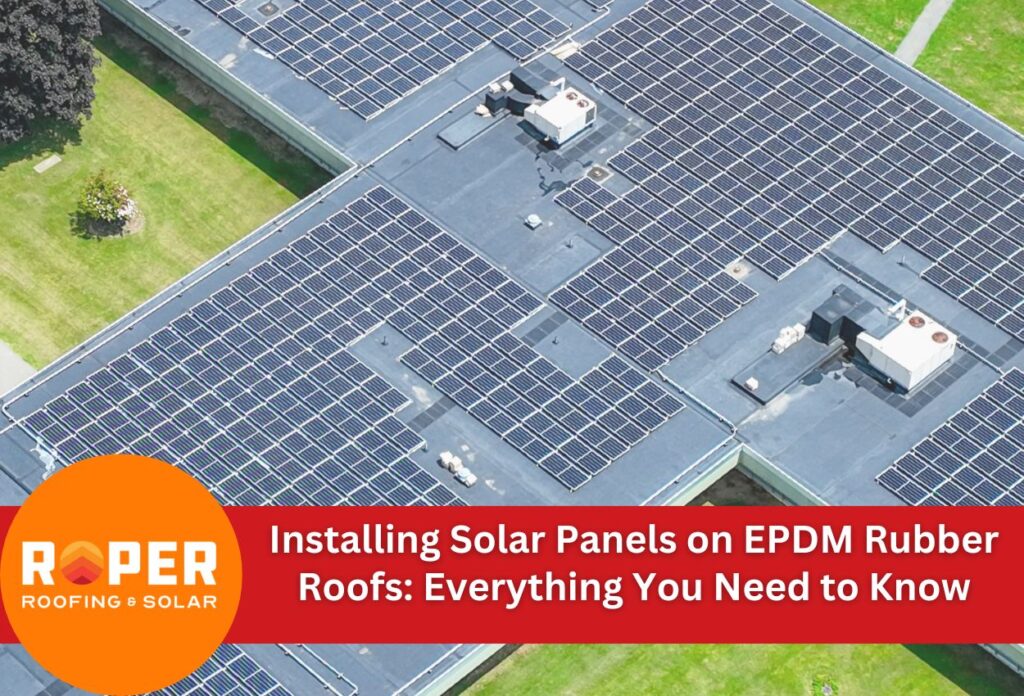
EPDM rubber roofing systems are popular among Denver home and business owners due to their durability and cost-effectiveness. As energy costs continue to rise, many property owners with EPDM roofs are exploring solar panel installation as a way to reduce monthly utility bills and increase property value.
The question “Can you put solar panels on an EPDM roof?” is common among those considering renewable energy options. EPDM membrane solar compatibility depends on several factors, including the roof’s structural integrity and the installation method used.
EPDM roofs offer numerous advantages for solar installations. The smooth, continuous surface provides excellent mounting options, while the material’s flexibility accommodates thermal expansion and contraction. Rubber roof solar mounting systems typically use ballasted or mechanically attached methods, both of which can work effectively when successfully planned and executed.
Denver’s climate makes solar panel installation particularly attractive. The city receives abundant sunshine throughout the year, making solar energy systems highly productive. Understanding the compatibility between EPDM roofing materials and solar mounting systems helps property owners make informed decisions about their renewable energy future while protecting their roof.
Understanding Your EPDM Roof and Its Solar Readiness
To determine whether your EPDM roof can support solar panels, a careful evaluation of structural capacity and membrane condition is required. The roof deck beneath the rubber membrane must handle additional weight from solar equipment, which typically adds 2 to 4 pounds per square foot.
EPDM membrane solar compatibility depends on the roof’s age, condition, and installation quality. Older membranes with existing damage, punctures, or seam failures may require repairs before solar installation. The membrane thickness and reinforcement also influence mounting options, with thicker membranes generally providing better durability for solar applications.
Additionally, structural factors include roof deck material, joist spacing, and load-bearing capacity. A professional structural analysis determines if additional reinforcement is necessary to support solar mounting systems. The roof’s slope affects drainage patterns, which solar installations must not compromise to prevent water pooling around equipment.
EPDM roof solar panel installation methods vary based on structural findings. Ballasted systems distribute weight across larger areas without cutting through the membrane, while mechanically fastened systems require strategic anchor placement. Other solar panel attachment methods include weighted racking systems, adhesive mounts, and fasteners with proper sealing.
A professional evaluation ensures your EPDM roof structure meets requirements for safe, effective solar installation while maintaining membrane integrity and warranty coverage.
Ballasted Solar Systems: The Preferred Method for EPDM Installations
Ballasted solar mounting systems are the optimal approach for EPDM roof solar panel installation. These weighted systems rely on gravity and carefully distributed ballast materials to secure solar panels without disrupting the rubber membrane. This method preserves the roof’s waterproof integrity while providing stable mounting for solar equipment.
The ballasted approach works exceptionally well because EPDM membranes are designed to handle distributed loads. Concrete blocks, pavers, or specialized ballast trays spread the system’s weight evenly across the roof surface, preventing concentrated stress points that could damage the membrane.
EPDM membrane solar compatibility shines with ballasted installations because the flexible rubber material accommodates thermal movement without compromising the mounting system. The membrane can expand and contract beneath the ballasted framework while maintaining secure panel positioning. Protective walkway pads and underlayment materials prevent abrasion between ballast components and the EPDM surface.
Ballasted solar panels offer significant advantages over fastener systems that cut through the membrane. Installation proceeds faster without drilling or sealing, reducing labor costs and membrane damage risks. The system remains fully removable, preserving roof warranty coverage and allowing future modifications without permanent roof alterations. This solar panel attachment method ensures long-term performance while maintaining the roof’s original protective capabilities.
Alternative Mounting Options When Ballasted Systems Won’t Work
When ballasted solar systems are not feasible for EPDM roofs due to structural limitations or wind load requirements, other attachment methods offer reliable alternatives. These systems use mechanical fasteners that pass through the rubber membrane but require specialized sealing techniques to maintain waterproof integrity. Professional installation ensures each fastener is sealed using EPDM-compatible materials and proven weatherproofing methods.
Fastener solar panel attachment methods for EPDM roofs include through-bolt systems with reinforcement plates and self-sealing mounting hardware. Each fastener requires careful placement to avoid seams and vulnerable membrane areas. Installers use butyl tape, EPDM patches, and liquid sealants specifically designed for rubber roofing applications to create watertight seals around mounting points.
Specialized mounting hardware designed for rubber roof systems includes low-profile rail systems and integrated sealing components. These systems feature base plates that distribute loads across the membrane surface while incorporating multiple sealing layers. Some manufacturers offer EPDM-specific mounting solutions with pre-formed sealing boots and compression gaskets engineered for membrane compatibility.
However, solar panel installation using these methods requires ongoing maintenance to ensure seal integrity. Regular inspections can spot leak points before significant water infiltration occurs. Professional contractors experienced with EPDM membranes and solar systems understand the right techniques and can recommend the most suitable attachment method based on specific roof conditions and structural requirements.
Protecting Your EPDM Membrane During Solar Installation
Professional installers follow strict protocols to prevent damage to EPDM membranes during solar panel installation. These protective measures begin before equipment arrives on site and continue throughout the entire installation process. Membrane protection preserves your roofing investment while ensuring successful solar system integration.
Essential protective steps include installing temporary walkways and equipment staging areas using specialized protective boards. These materials distribute foot traffic and equipment weight across larger membrane areas, preventing punctures from concentrated loads. Installers use soft-soled shoes and avoid dragging tools or materials across the rubber surface to minimize abrasion risks.
EPDM roof solar panel installation requires careful handling of mounting components to prevent sharp edges from contacting the membrane. Professional crews use protective padding beneath ballast materials and mounting hardware, creating barriers between metal components and the rubber surface. This approach prevents cuts, tears, and surface damage that could compromise membrane integrity. Experienced contractors also ensure installation methods comply with warranty requirements, protecting both your roofing and solar investments by following approved procedures for mounting systems.
Quality installers document their protective measures and installation methods, providing detailed records that support warranty claims if issues arise. This documentation demonstrates adherence to manufacturer specifications and professional installation standards, protecting your roof and solar system.
Long-Term Performance and Maintenance Considerations
EPDM roofs paired with solar installations demonstrate excellent long-term performance when correctly installed and maintained. The rubber membrane’s inherent durability complements solar panel longevity, with both systems designed for 20 to 30-year service lives. EPDM membranes remain stable over time because the flexible rubber material continues accommodating thermal expansion without affecting solar mounting integrity.
Solar panels on EPDM roofs rarely experience performance degradation compared to other roofing materials. The smooth rubber surface reflects less heat, helping panels operate at optimal temperatures for improved energy production. Ballasted solar panel systems maintain consistent positioning over decades because the weighted mounting approach resists thermal stress that might affect mechanically fastened installations.
Regular maintenance ensures maximum lifespan for both systems. Annual inspections should specifically examine the EPDM membrane around mounting areas, checking for signs of abrasion, punctures, or seam separation. Solar panel cleaning and electrical connection inspections maintain optimal energy production while identifying potential issues.
Roof maintenance should also include monitoring drainage patterns to prevent water accumulation around equipment. Caring for rubber roof solar mounting systems involves checking ballast positioning and protective padding integrity. Professional maintenance programs typically schedule coordinated inspections addressing both roofing and solar system needs, ensuring comprehensive care for your integrated energy solution while maximizing both system performance and longevity.
Choosing the Right Installation Team for Your EPDM Solar Project
Selecting qualified installers with experience in both EPDM roofing and solar technology is essential for a successful project. Contractors must understand the unique properties of rubber membranes and how they interact with solar mounting systems. This dual expertise ensures proper installation techniques are used that protect your roof while optimizing solar system performance.
Experienced installers familiar with EPDM membrane solar compatibility can navigate the specific challenges these projects present. They understand handling techniques for rubber roofing materials and know which solar panel attachment methods EPDM roofs accommodate effectively. This knowledge prevents mistakes that could damage your membrane or compromise your solar investment.
When evaluating potential contractors, ask specific questions about their EPDM experience and solar installation methods. Inquire about their familiarity with ballasted solar panel mounting systems and their approach to membrane protection during installation. Request references from similar projects and verify their licensing for both roofing and electrical work required for complete solar installations.
Qualified contractors should understand local building codes and permit requirements for solar panel systems. They should explain their quality control processes and warranty provisions covering both roofing and solar components. Professional installers will conduct thorough roof assessments before proposing installation methods and provide detailed project timelines that account for weather conditions and material coordination.
The right team ensures your solar panel installation meets industry standards while preserving your roofing warranty and maximizing solar system longevity.
Choose Roper Roofing & Solar for Your Denver EPDM Solar Panel Installation
If you’re considering upgrading your Denver property with solar panels on an EPDM roof, it’s essential to choose the right team for the job. At Roper Roofing & Solar, we specialize in EPDM roof solar panel installations, ensuring that your solar system is compatible and safely mounted without compromising your roof. Our expert team uses the latest solar panels and specialized mounting hardware designed specifically for rubber roofs, minimizing any risk of damage.
Don’t risk the health of your EPDM roof by opting for inexperienced installers. Trust Roper Roofing & Solar, where we understand the unique requirements of rubber roofs and Denver’s building codes. Ready to reduce your energy costs and enhance your property’s efficiency with a professional solar installation? Call us today at (720) 475-1065 to schedule your consultation and take the first step towards a greener, more sustainable home or business.