

Torch-Down Roofing vs. Modified Bitumen: A Guide to Flat Roof Membrane Systems
Property owners and contractors facing flat roof installation or replacement decisions often encounter two prominent membrane options: torch-down roofing and modified bitumen systems. Both solutions belong to the modified bitumen family, yet they differ significantly in installation methods, performance characteristics, and practical applications for commercial and residential properties.
Torch-applied roofing materials utilize an open flame installation process that creates strong adhesion between membrane layers through heat activation. Modified bitumen roofing systems encompass multiple installation techniques, including self-adhering, cold-applied adhesives, and mechanical fastening methods that don’t require flame application.
The flat roof membrane comparison between these systems involves critical factors such as installation complexity, weather resistance, longevity, and maintenance requirements. Commercial roofing membrane options must withstand heavy foot traffic, equipment loads, and extreme temperature fluctuations, while residential applications typically focus on cost-effectiveness and durability.
Understanding bitumen roof installation methods helps property owners make informed decisions based on building codes, safety requirements, and specific roof conditions. Each system offers distinct advantages for different scenarios, making proper evaluation essential for achieving the best possible roofing performance and long-term value.
Understanding Modified Bitumen Roofing Systems
Modified bitumen roofing systems represent an advanced evolution of traditional built-up roofing, incorporating polymer-enhanced materials to create superior waterproof barriers for flat and low-slope roof structures. The composition centers on asphalt modified with either APP (Atactic Polypropylene) or SBS (Styrene-Butadiene-Styrene) polymers, which dramatically improve flexibility, temperature resistance, and overall membrane performance.
The manufacturing process involves blending these specialized polymers with asphalt at high temperatures, creating a reinforced material that maintains elasticity across extreme temperature ranges. APP-modified membranes offer excellent heat resistance and aging characteristics, while SBS formulations provide enhanced flexibility and cold-weather performance. Both polymer types create commercial roofing membrane options that significantly outperform conventional asphalt systems.
Modified bitumen roofing systems operate through multi-layer design principles, typically incorporating a base sheet, intermediate plies, and a cap sheet with granulated or smooth surfaces. Each layer contributes to the overall waterproofing integrity, with overlapping seams creating continuous protection against leaks. The polymer modification allows membranes to expand and contract with temperature fluctuations without cracking or splitting.
These bitumen roof installation methods create durable barriers that accommodate structural movement while maintaining watertight seals. The multi-ply construction distributes stress across multiple layers, preventing single-point failures that could compromise the entire roofing system’s effectiveness on flat roof membrane applications.
Torch Down Application Methods and Installation Requirements
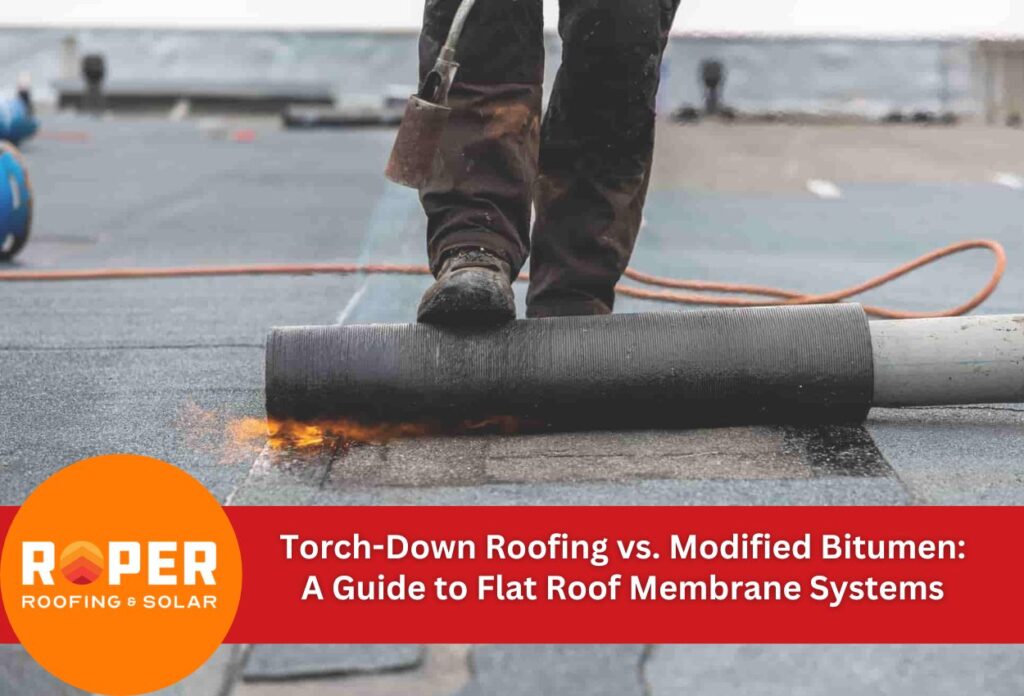
Torch-applied roofing materials require specialized heat welding techniques that create permanent bonds between membrane layers through controlled flame application. Professional installers utilize propane torches with adjustable flame controls to heat the underside of modified bitumen rolls, activating the asphalt adhesive for secure attachment to substrate surfaces. The process needs precise temperature control to achieve proper adhesion without overheating the membrane material.
Installation equipment includes heavy-duty propane torches, flame-resistant protective gear, fire extinguishers, and specialized rollers for seam compression. Commercial roofing membrane options utilizing torch application require experienced technicians who understand proper heating patterns, overlap specifications, and seam sealing procedures. The flame must maintain a consistent distance and movement speed to ensure uniform heating across the entire membrane surface.
Safety protocols for torch-down roofing installations encompass fire prevention measures, including cleared work areas, water sources, and continuous monitoring during application processes. Professional expertise becomes essential due to open flame risks, particularly on occupied buildings or structures with combustible materials.
The specialized nature of bitumen roof installation methods using torch application creates higher labor costs and extends installation timeframes compared to cold-applied alternatives. However, the heat welding process produces superior adhesion strength and seamless membrane connections that enhance long-term performance for flat roof membrane comparison scenarios requiring maximum durability.
Performance Comparison: Durability and Weather Resistance
Weather resistance capabilities differ significantly between torch-down roofing and cold-applied modified bitumen systems when exposed to extreme environmental conditions. Torch-applied roofing materials have superior performance against UV radiation due to heat-welded seams that create membrane surfaces without vulnerable adhesive joints. The flame fusion process eliminates potential separation points where moisture could get in during freeze-thaw cycles or thermal expansion events.
Hail impact resistance varies between installation methods, with torch-down systems typically showing better puncture resistance due to complete membrane adhesion to substrate materials. Modified bitumen roofing systems installed through cold application methods may experience localized delamination under severe hail conditions, particularly when mechanical fasteners create stress concentration points.
Temperature fluctuation tolerance represents an important performance factor for commercial roofing options in climates experiencing extreme seasonal variations. Torch-welded installations maintain continuous adhesion across temperature ranges, while cold-applied systems may develop edge lifting or seam separation during repeated expansion cycles. The heat fusion process creates molecular bonding that withstands thermal stress better than adhesive-dependent connections.
Expected lifespan projections show torch down installations typically lasting 15 to 25 years with proper maintenance, while alternative bitumen roof installation methods average 10 to 20 years under similar conditions.
Installation Complexity and Labor Requirements
Professional installation of torch-applied roofing materials demands specialized training and certification programs that typically require 40 to 80 hours of hands-on instruction. Contractors must master flame control techniques, proper heating patterns, and safety protocols before attempting torch-down roofing installations. Many manufacturers mandate specific training completion before honoring warranty coverage, creating additional qualification barriers for installation crews.
Cold-applied modified bitumen roofing systems require less specialized expertise, allowing broader contractor participation. Installation teams need basic roofing knowledge and familiarity with adhesive application techniques rather than flame welding certification. This accessibility reduces project delays when seeking qualified installation crews and provides more competitive bidding opportunities for property owners.
Time requirements for torch application methods typically extend project schedules by 25% to 40% compared to cold-applied alternatives. The methodical heating process cannot be rushed without compromising the structural integrity of the membrane, and safety protocols need slower work progression. Weather restrictions further complicate scheduling, as wind conditions and precipitation prevent safe torch operations more frequently than cold application methods.
Commercial roofing membrane options utilizing mechanical fastening or self-adhering installation complete projects faster while requiring fewer specialized tools and equipment. Bitumen roof installation methods without flame application allow multiple crew members to work simultaneously across larger roof sections, improving overall productivity. However, the reduced installation complexity may result in lower adhesion strength and shorter membrane lifespan compared to properly executed torch-down applications requiring greater skill levels.
Maintenance and Repair Considerations for Each System
Routine maintenance requirements for torch-down roofing and modified bitumen systems share fundamental inspection protocols while differing in specific repair approaches and accessibility challenges. Both flat roof membrane options require inspections twice a year, focusing on seam integrity, surface granule retention, and drainage system functionality. Professional assessments should occur after severe weather, particularly hailstorms or extended freeze-thaw periods that can stress membrane materials.
Torch-applied roofing materials typically demonstrate superior resistance to routine maintenance issues due to heat-welded seams that resist separation and leaks. Inspection schedules should emphasize drain areas, gap seals, and edge details where thermal movement creates the greatest stress on membrane connections.
Repair procedures for torch-down systems require skilled technicians with flame welding capabilities to maintain warranty coverage and ensure proper membrane adhesion. Damaged sections must be cut out and replaced using identical heating techniques employed during initial installation. Cold-applied modified bitumen roofing systems allow simpler patch repairs using compatible adhesives and membrane materials without specialized flame equipment.
Choosing the Right System for Your Commercial Property
Building characteristics and environmental factors play important roles when selecting between torch-down roofing and modified bitumen alternatives for commercial property applications. Structural weight capacity determines whether buildings can support the additional weight of multi-ply torch-applied systems, while roof deck materials influence installation compatibility. Concrete and steel substrates typically accommodate both flat roof membrane comparison options, but wood decking may require specific fire-resistant preparations for torch applications.
Climate conditions significantly impact modified bitumen roofing systems across different geographic regions. Properties in areas experiencing extreme temperature fluctuations benefit from torch-down installation methods that provide superior thermal cycling resistance. Buildings located in high-wind zones require enhanced membrane adhesion achieved through heat welding processes, while moderate climate environments may perform adequately with cold-applied commercial roofing membrane options.
Fire codes and insurance requirements often dictate acceptable bitumen roof installation methods for specific building types and occupancies. Educational facilities, healthcare buildings, and high-occupancy structures frequently restrict open flame applications, making cold-applied modified bitumen systems the preferred choice, while industrial properties with minimal fire restrictions may utilize torch-applied roofing materials to achieve maximum membrane performance and longevity.
Working with experienced roofing contractors ensures proper system selection based on property evaluations and performance requirements. Qualified professionals assess structural limitations, local building codes, and long-term maintenance capabilities before recommending specific installation approaches. Professional consultation helps property owners balance initial costs against expected performance benefits when comparing torch down and alternative modified bitumen applications for their particular building requirements.
Expert Modified Bitumen Services at Roper Roofing & Solar
Choosing the right roofing system for your commercial property requires careful consideration of several factors, including durability, installation complexity, and maintenance needs. Whether you’re leaning towards the robustness of torch-down roofing or the versatility of modified bitumen, Roper Roofing & Solar has the expertise to guide you through your decision. Our experienced professionals are equipped to handle all aspects of your roofing project, ensuring top-quality installation and long-term performance.
If you’re unsure about which system best fits your property, or if you need immediate installation services, don’t hesitate to call us today at (720) 475-1065 to schedule a consultation or to start your roofing project with us.