

How Long Does Commercial Roof Installation Take? Complete Guide for Denver Property Owners
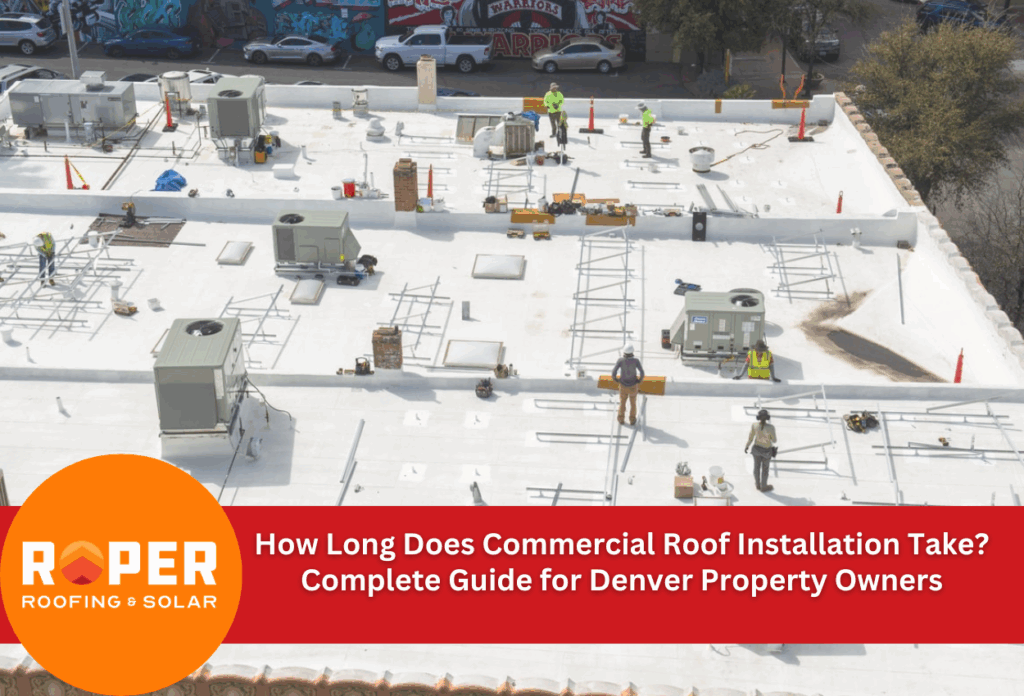
Commercial roof installation projects typically require anywhere from one week to several months to complete, depending on various factors that directly impact the construction schedule. For business owners planning a roofing project, accurate timeline estimates are necessary to coordinate operations and minimize disruptions.
Understanding how long commercial roof installation takes is essential for managing tenants or employees, scheduling deliveries, and coordinating with contractors. A standard commercial roof replacement timeline is based on building size, roof complexity, and material selection. Flat roof installations differ from sloped systems, as membrane applications require different scheduling considerations than traditional shingle roofing systems.
Multiple variables influence commercial roofing project schedules beyond the obvious considerations. Weather conditions, permit approval processes, contractor scheduling, and existing roof conditions all partially determine the project duration. Commercial roofing contractor availability during peak seasons can extend timelines, particularly when specialized systems require experienced installation teams.
Other factors affecting roof installation timing include structural modifications, HVAC equipment relocation, and coordination with building occupants. Denver’s climate patterns impact scheduling decisions, with certain months offering more predictable weather for completion. Property managers benefit from understanding these timeline variables when planning and budgeting for their commercial roofing project.
Key Factors That Determine Your Installation Timeline
Building size is the most obvious factor influencing the duration of commercial roof installations, but roof complexity is often more significant in determining project schedules. Simple rectangular buildings with minimal rooftop equipment allow faster installation progress, while structures featuring multiple levels, skylights, HVAC units, and architectural details require additional time for proper integration and waterproofing.
Structural considerations directly impact how long commercial roof installation takes, particularly when existing decking requires reinforcement or replacement. Buildings with deteriorated structural elements need a comprehensive evaluation and repair before new roofing materials can be installed. Load-bearing capacity assessments may reveal necessary upgrades that extend the commercial roof replacement timeline substantially.
The material selected also influences the flat roof installation duration, with single-ply membranes typically installing faster than built-up systems requiring multiple layers. Specialty materials like green roofing systems or solar-integrated solutions have longer timelines due to the complex preparation requirements and specialized installation techniques.
Additionally, accessibility challenges significantly affect commercial roofing projects when buildings lack adequate crane access or require materials to be transported through occupied spaces. Existing roof conditions, including multiple layers of old materials, create disposal logistics that impact timeline planning. Factors affecting roof installation timing also include permit processing, weather windows, and commercial roofing contractor availability, specifically during peak construction seasons when scheduling conflicts commonly occur.
Weather and Seasonal Considerations for Commercial Roofing Projects in Denver
Colorado’s climate significantly influences how long commercial roof installation takes throughout different seasons. Denver’s weather brings heavy snow, intense UV exposure, sudden temperature swings, and powerful winds that directly affect commercial roofing project schedules. These environmental factors require careful timing to ensure the installation is not delayed.
Spring and fall typically provide optimal windows for commercial roof replacements, offering more stable temperatures and reduced precipitation. Summer comes with extreme heat that can affect material handling and worker productivity, while intense afternoon thunderstorms can interrupt work. Winter installations are more challenging due to snow accumulation, freezing temperatures that affect material performance, and shortened daylight hours that limit productive working time.
Temperature fluctuations common in Denver can cause materials to expand and contract, requiring specific installation timing to ensure proper membrane adhesion and sealing. Wind conditions above certain thresholds halt membrane installations for safety reasons, while temperature requirements for adhesives and sealants dictate appropriate installation windows throughout the year. Strategies to prevent delays include monitoring weather forecasts several days in advance to avoid installing materials before precipitation.
Seasonal weather delays frequently extend flat roofing projects beyond initial estimates, especially when unexpected storm systems move through the region. Commercial roofing contractor availability often becomes limited when favorable weather windows create high demand for installation services.
Material Types and Their Estimated Installation Times
Different commercial roofing systems have varying installation durations due to their unique preparation requirements and complexity levels. TPO membrane installations are typically completed faster than other single-ply systems because the lightweight material and installation methods allow crews to cover large areas efficiently while maintaining quality standards.
EPDM rubber roofing systems generally require similar timeframes to TPO but may extend slightly longer when fully-adhered installation methods are specified. The material’s flexibility and proven durability make it popular for flat roof installations, though seaming processes require careful attention. Modified bitumen systems need more time due to multiple-layer applications and torch-down or cold-applied installation techniques that cannot be rushed.
Metal roofing options often have the longest commercial roof replacement timeline among common systems, especially when structural modifications are necessary to support additional weight. Standing seam metal installations require precise measurements and custom fabrication that can extend the commercial roofing project schedule by several weeks. However, metal systems offer exceptional longevity that justifies the extended installation period.
Material delivery schedules significantly impact how long commercial roof installation takes, with specialty systems requiring longer lead times than standard membrane materials. Commercial roofing contractors are crucial for flat roof installations, as they must coordinate multiple deliveries, properly store materials, and manage inventory to prevent work delays.
Impact of Contractor Availability and Workforce on Project Duration
Contractor scheduling and crew size directly determine how efficiently commercial roofing projects progress from start to completion. Established roofing companies typically maintain larger crews with specialized experience levels that can significantly reduce installation timeframes. A skilled team of experienced roofers can complete work that might take smaller crews twice as long, making contractor selection crucial for meeting project deadlines.
Experience levels within installation crews dramatically affect how long commercial roof installation takes, specifically when complex details require precise workmanship. Seasoned professionals work more efficiently while maintaining quality workmanship, reducing the likelihood of mistakes that extend the commercial roof replacement timeline. Inexperienced crews may require additional supervision and rework time, which impacts overall project duration.
During busy construction seasons, contractor availability may be limited when demand exceeds supply. Established contractors often schedule projects months in advance, requiring property owners to plan accordingly to secure preferred installation dates. Companies with limited workforce capacity may take longer simply due to resource constraints rather than project complexity.
Working with reputable roofing professionals provides access to specialized equipment and established supplier relationships that streamline material procurement and delivery schedules. These operational advantages directly impact commercial roofing project schedules by reducing delays caused by equipment failures or material shortages. Factors affecting roof installation timing often relate to contractor preparedness, workforce stability, and their ability to coordinate multiple project elements simultaneously while maintaining consistent progress toward completion.
Project Phases and Realistic Timeline Expectations
Understanding the commercial roof installation process helps property owners anticipate each phase and prepare accordingly for the duration required. The installation sequence begins with detailed site assessment and preparation work that can take several days, depending on building complexity. This initial phase identifies structural issues, access challenges, and coordination requirements with building occupants.
The tear-off phase is typically the most disruptive period, sometimes requiring multiple days for complete removal of existing roofing materials. Crews systematically remove old membranes, insulation, and damaged decking while protecting the building interior from weather exposure. This phase of the project needs careful scheduling to minimize interruptions and coordinate debris removal.
Installation of new roofing materials follows a structured sequence starting with deck preparation, insulation placement, and membrane application. The project duration varies during this phase based on weather conditions, material type, and detail complexity around penetrations. Each layer must cure or set properly before subsequent materials can be applied, creating natural pause points in the schedule.
Quality control inspections occur throughout the installation process, with milestone reviews ensuring proper installation techniques and material performance. The final inspection phase includes thorough system testing, a comprehensive inspection, and documentation. Commercial roofing project schedules typically allocate additional time for final details and cleanup activities. Factors affecting closing phases include inspector availability, weather conditions for testing procedures, and commercial roofing contractor availability for warranty registration.
Tips to Minimize Delays and Keep Your Project on Track
Proactive planning is essential for maintaining commercial roofing project schedules and avoiding delays. Securing necessary permits well in advance prevents common bottlenecks that can halt progress once installation crews are ready to begin work. Building departments often require several weeks for review and approval processes, making early permit submission crucial for meeting target completion dates.
Material ordering requires careful coordination with suppliers to ensure the delivery aligns with the commercial roof replacement timeline. Specialty materials like custom metal panels or specific membrane colors may require extended lead times that affect project scheduling. Establishing firm delivery dates and backup supplier options helps prevent delays when primary sources experience inventory shortages or manufacturing issues.
Site preparation activities should begin weeks before installation crews arrive to address potential obstacles that could slow progress. Clearing roof areas of equipment, coordinating utility disconnections, and arranging adequate storage space for materials prevent workflow interruptions once work begins. These preliminary steps directly influence how long commercial roof installation takes by eliminating common delays.
Clearly communicating with your selected contractor ensures any issues that arise during installation are quickly resolved. Regular progress meetings, daily status updates, and predefined escalation procedures help maintain commercial roofing project schedules. Contingency planning for weather delays, material shortages, and unexpected structural discoveries allows business operations to continue with minimal disruption. Having a commercial roofing contractor available to address concerns quickly is crucial for preventing significant schedule extensions and staying on track.
By considering these potential delays and planning ahead, property owners can enjoy a seamless installation process that protects their building and bottom line.
Keep Your Denver Business Covered with Roper Roofing & Solar
Understanding the duration of commercial roof installation is crucial for your business planning. Variables such as roof complexity, material type, and Denver’s unique weather conditions play significant roles in determining the project timeline. Whether you’re installing a TPO, EPDM, or metal roofing system, each comes with its specific time requirements influenced by delivery schedules and installation complexity.
Working with a seasoned contractor like Roper Roofing & Solar can streamline your installation. Our expertise in managing every phase of the roofing project, from material acquisition to final inspection, ensures that your project stays on track, minimizing any potential delays.
Don’t let roofing issues disrupt your business operations. Call Roper Roofing & Solar today at (720) 475-1065 to schedule a consultation and ensure your commercial roofing project in Denver is completed efficiently and on time.